British National (Overseas) Passport
The Complexity of British Nationality
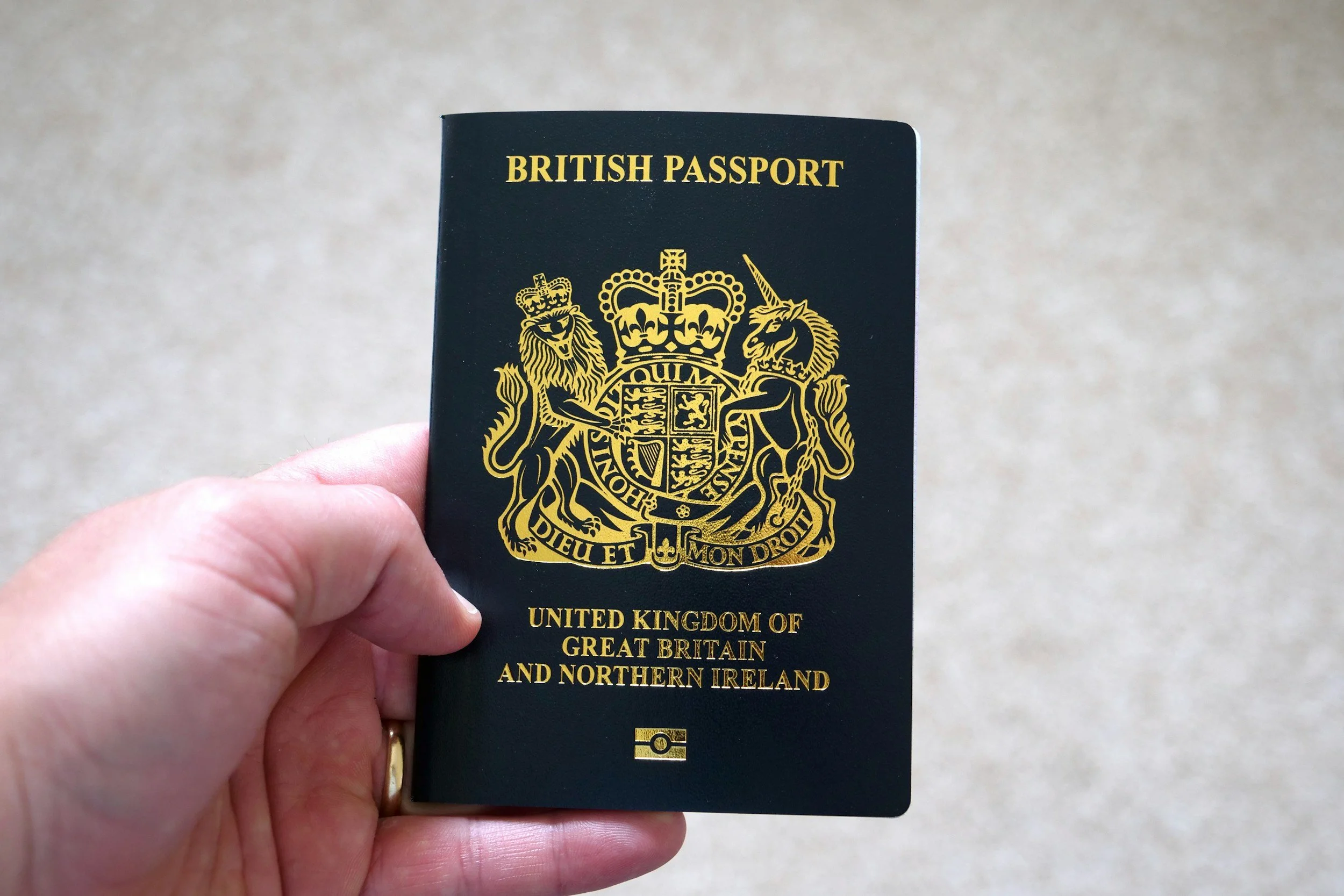
The British Nationality Act 1981 (all 121 pages of it) defines 6 different types of British citizenship, only 1 of which confers the right of abode in Great Britain and Northern Ireland. Due to its 6 citizenships, the UK is the only country in the world to have been issued multiple, concurrently valid 3-letter country codes by ICAO for use in its passports. If you have seen a UK passport you might have wondered why it has “British Passport” printed on the top of the cover. This is because that is the only shared text element across the 12 different types of ordinary passports issued by the UK – to see them all via Edisontd.nl, select the UK, then National Passport, then Turks and Caicos Islands). An ordinary passport is one issued normally to a citizen – meaning not a diplomatic, service, temporary or any other type of passport or non-citizen travel document. Those 12 passports (each listing 1 of the 6 different types of citizenship on the nationality line) are issued based on differing rights of abode. Such rights of abode are acquired in a similar way to citizenship (but independently of citizenship), thus in practice functioning like several more types of citizenship. All of this complexity is due to the high degree of autonomy that the UK’s various territories historically had and have to this day.
Origins and Acquisition of British National (Overseas) Citizenship
One of the more unusual of the 6 types is called British National (Overseas) citizenship, BNO for short. This citizenship was created by The Hong Kong (British Nationality) Order 1986, which came into force 1 July 1987, exactly a decade before the handover of Hong Kong from the UK to China. This gave Hong Kong residents with then incumbent British Dependent Territories Citizenship the opportunity to register for BNO citizenship before their British Dependent Territories Citizenship would cease to exist after the handover. BNO citizenship was only available by active registration during that 10 year period and only to people with a connection to Hong Kong as defined in the 1986 order. It cannot be passed on by descent, thus a child born to parents holding exclusively BNO citizenship in a country that doesn’t offer Jus Soli would be stateless at birth. According to the UK Home Office, approximately 2.9 million people today are BNO citizens but only about 400,000 of them had valid passports in 2020. BNO citizens have the right to hold a BNO passport, which is a British passport with BNO listed as nationality. They also have the right to UK consular protection. BNO citizenship officially does not grant right of abode anywhere, making it among only a few such citizenships in the world (the only others being other types of UK citizenship).
BNO Visa for the UK – Eligibility and Features
Since 2021 the UK has been issuing the BNO visa to BNO citizens, their children (including adult children if living in the same household) and spouses (including same-sex spouses). BNO citizens plus their dependents amount to about 5.4 million people, according to the Home Office in 2020. The BNO visa grants the right to live, work and access benefits in Great Britain and Northern Ireland. After 5 years of holding the visa, one can apply for permanent residency, what the UK calls Indefinite Leave to Remain or ILR. A year later one can apply for British Citizenship, 1 of the 6 types of UK citizenship and the only one that confers right of abode in Great Britain and Northern Ireland. As the UK allows multiple citizenship, one can concurrently hold multiple types of UK citizenship, meaning a BNO who naturalises as a British Citizen would be entitled to hold two British passports, each with a different nationality listed.
BNO Passport as a Travel Document
Despite not conferring the right of abode anywhere, the BNO passport is a very capable travel document. Notably the passport grants visa-free entry to all of the Schengen area, the UK, Japan, South Korea and most of Latin America. It also has ETA access to Canada, Australia and New Zealand. See the map below for all the details. Green means visa-free or visa on arrival and red means visa-required. Other colours are explained in the map index.
To determine what countries grant visa-free entry to BNO passport holders we did independent research, drawing primarily on data from the International Air Transport Association (IATA) Timatic system. This is the system used by airlines to check entry requirements for all travel documents and destinations.
A Desirable Travel Document
It is clear that someone who was registered as a BNO between 1987 and 1997 would benefit from holding a valid BNO passport. BNO citizenship comes with no obligations while citizens have the privilege of holding a British passport, receiving UK consular protection and maintaining the option of acquiring UK residency with few conditions.